

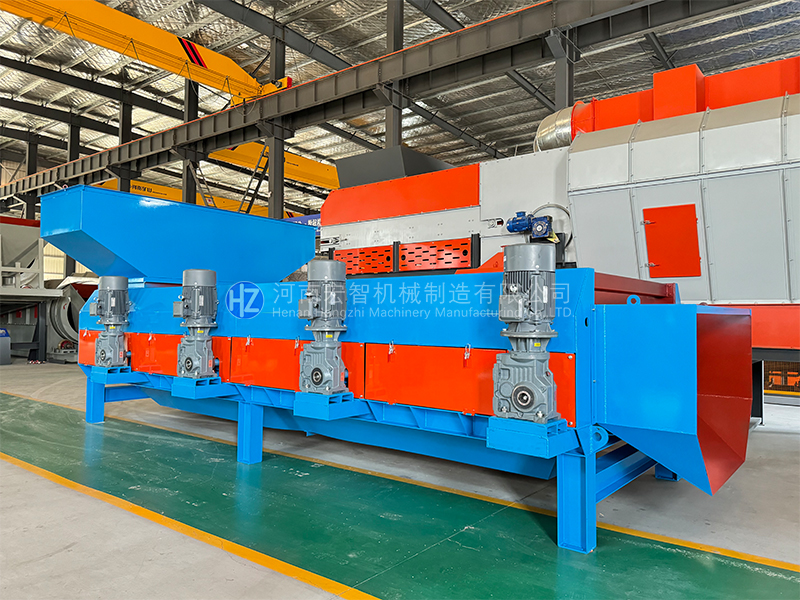
Construction waste processing equipment plays a critical role in modern demolition, recycling, and material recovery operations.
As cities expand, infrastructure upgrades accelerate, and sustainability regulations become stricter, the demand for efficient
construction waste processing equipment continues to grow. Contractors, recyclers, and bulk buyers increasingly search for
wholesale manufacturers, competitive quotes, and industry recognized solutions that can help reduce disposal costs while
recovering reusable materials.
This page provides a fully original, SEO-friendly, English-language overview of construction waste processing equipment,
including definitions, common system types, technical specifications, wholesale sourcing factors, pricing considerations,
operational advantages, and a comparison table for buyers. The content is designed for blog pages, directory pages,
and industry landing pages, and it can be inserted directly into the middle of an HTML page.
Construction waste processing equipment refers to machines and integrated systems used to sort, crush, screen, separate,
compact, and recycle waste generated from construction, renovation, demolition, and infrastructure projects. This waste can
include concrete, bricks, asphalt, wood, metal, soil, gypsum board, plastic, insulation materials, and mixed debris.
In practical terms, construction waste processing equipment helps transform mixed jobsite waste into usable recycled aggregates,
recovered metals, and reusable materials. The equipment is widely used in recycling plants, transfer stations, demolition sites,
municipal solid waste facilities, and large-scale waste management operations. For buyers, the main value lies in lowering
landfill volume, improving material recovery rates, and creating a more sustainable waste handling workflow.
In the wholesale market, construction waste processing equipment is typically sourced as single machines, modular units,
or complete production lines. Buyers often request quotes based on capacity, feed material, automation level, wear-part design,
installation requirements, and after-sales support. Because different projects produce different waste streams, choosing the
right system is essential for achieving high throughput and stable recycling performance.
The construction and demolition sector generates enormous volumes of waste every year. Without efficient processing, this waste
often ends up in landfills, creating higher disposal costs, wasted resources, and environmental pressure. Construction waste
processing equipment provides a practical solution by enabling on-site or off-site material recovery.
For industrial buyers, the right construction waste processing equipment can significantly improve project economics. In
demolition recycling, for example, a well-designed processing line can turn mixed debris into graded aggregates, while metal
recovery systems can extract ferrous and non-ferrous materials with high efficiency. This makes construction waste processing
equipment an important investment for wholesale operations, rental fleets, recycling facilities, and EPC contractors.
Construction waste processing equipment covers a broad range of machines. The exact configuration depends on the input material,
required output size, and desired recovery method. Below are the most common categories used in the industry.
Jaw crushers are used for primary crushing of large, hard construction waste such as concrete blocks, bricks, and stone debris.
They are valued for their robust structure, high crushing force, and ability to handle heavy-duty feed materials.
Impact crushers are suitable for secondary crushing and produce more cubic-shaped output. They are commonly used in concrete
recycling applications where particle shape and aggregate quality are important.
Mobile crushers are mounted on tracks or wheels and can move directly to demolition sites or temporary recycling zones.
These machines are popular for contractors who need flexible on-site processing and reduced hauling costs.
Vibrating screens separate crushed materials by size. They are essential in construction waste processing equipment lines because
they classify aggregates into different product grades and remove oversize particles.
Trommel screens are rotating screening drums used to separate fine materials, soil, and mixed waste fractions. They are often
used in pre-sorting or after-crushing operations.
Magnetic separators recover ferrous metals such as rebar, steel fragments, and iron scrap from processed construction waste.
They improve metal recovery and protect downstream equipment from metal contamination.
Air Separators or air classifiers remove lightweight contaminants such as plastic film, paper, foam, and dust. This improves
the quality of recycled output.
Conveyors transport materials between processing stages. In a full construction waste processing system, conveyors improve
workflow, reduce manual handling, and support continuous operation.
Manual sorting stations are used to remove oversized, hazardous, or non-recyclable materials before or after mechanical
separation. They are important for quality control and safety.
Dust control systems reduce airborne particles generated during crushing, screening, and conveying. These systems are often
required for safer and cleaner operations.
A complete construction waste processing line usually follows a structured sequence. While exact configurations vary, most
systems include the following stages:
This workflow is designed to maximize material recovery while minimizing waste volume. In wholesale systems, modular design is
often preferred because it allows buyers to adjust capacity and processing steps according to site conditions and project needs.
Buyers looking for construction waste processing equipment usually compare not only machine price but also operational benefits.
Industry recognized systems are valued because they combine durability, output stability, and recycling performance.
| Advantage | Industry Benefit | Buyer Impact |
|---|---|---|
| High material recovery | Improves reuse of concrete, metal, and aggregates | Lower disposal fees and more saleable output |
| Reduced landfill volume | Diverts mixed waste from landfill sites | Supports compliance and sustainability targets |
| Flexible configuration | Can be adjusted for demolition, renovation, or mixed debris | Better fit for diverse projects |
| Automation capability | Supports stable output and lower labor intensity | Improved efficiency and lower operating burden |
| Scalable capacity | Available in small, medium, and large production lines | Suitable for both local and industrial-scale buyers |
| Lower transport costs | On-site or near-site processing reduces hauling distance | Lower logistics expense |
When searching for top wholesale manufacturers of construction waste processing equipment, buyers generally focus on technical
capability, customization, production consistency, and support services rather than brand names alone. Since this page is designed
to remain industry-neutral, the following factors are presented as universal sourcing criteria.
Wholesale buyers often require multiple units or complete production systems. For that reason, sourcing construction waste
processing equipment from manufacturers with proven bulk supply ability can improve lead time management, reduce cost per unit,
and simplify long-term maintenance.
Quotes for construction waste processing equipment can vary widely depending on capacity, machine type, level of automation,
and included accessories. A low quote is not always the best value if it excludes essential components, installation support,
or spare parts.
| Quote Factor | What It Usually Includes | Why It Matters |
|---|---|---|
| Equipment type | Crusher, screen, separator, conveyor, or full line | Determines the overall system function |
| Processing capacity | Hourly or daily throughput rating | Directly affects productivity and project fit |
| Feed material | Concrete, brick, mixed debris, asphalt, or soil | Influences machine selection and wear resistance |
| Power system | Electric, diesel, or hybrid configuration | Impacts operating cost and deployment flexibility |
| Automation level | Manual, semi-automatic, or fully automatic controls | Affects labor requirement and process stability |
| Accessories | Feed hopper, magnets, dust control, control cabinet | Changes total purchase cost and usability |
| Shipping and installation | Packing, freight, setup, and commissioning | Can significantly affect total project cost |
To compare quotes effectively, buyers should request a detailed quotation that separates the machine price, optional components,
delivery charges, and service terms. This helps avoid hidden costs and supports fair comparison between wholesale offers.
Construction waste processing equipment is available in many sizes and performance levels. The specification table below provides
a general reference for industry buyers. Actual values may vary according to design and application.
| Equipment Category | Typical Capacity | Main Function | Common Power Range | Typical Output |
|---|---|---|---|---|
| Jaw Crusher | 50-800 TPH | Primary crushing | 55-400 kW | Coarse crushed material |
| Impact Crusher | 80-500 TPH | Secondary crushing | 75-500 kW | Cubic recycled aggregate |
| Mobile Crusher | 80-300 TPH | On-site crushing | 100-450 kW | Processed reusable aggregate |
| Vibrating Screen | 50-600 TPH | Size classification | 5-30 kW | Multiple screened fractions |
| Trommel Screen | 20-200 TPH | Separation and screening | 4-18 kW | Fine and oversized fractions |
| Magnetic Separator | Depends on line capacity | Ferrous metal recovery | 1-10 kW | Recovered metal scrap |
| Air Separator | 20-300 TPH | Light material removal | 7-45 kW | Cleaner recycled output |
Construction waste processing equipment is used across a wide range of industrial and municipal applications. It is especially
important wherever large volumes of mixed waste must be reduced, cleaned, and converted into reusable products.
In each of these applications, the main objective is to create a reliable flow of processed material that can be reused or sold.
As recycling standards continue to rise, the market for construction waste processing equipment remains strong and increasingly
performance-oriented.
Wholesale sourcing offers several advantages for buyers who need construction waste processing equipment in volume or who plan
to build a full recycling line. Compared with fragmented purchasing, wholesale procurement can improve integration and cost control.
| Wholesale Benefit | Description | Business Result |
|---|---|---|
| Better unit pricing | Bulk orders often reduce per-unit cost | Higher margin potential |
| System compatibility | Machines can be designed to work together | More stable production line |
| Streamlined logistics | Single-source shipment and coordination | Lower procurement complexity |
| Consistent quality | Standardized manufacturing and inspection | More reliable operation |
| Long-term support | Spare parts and technical service from one supplier | Easier maintenance planning |
For buyers who want to scale recycling operations, wholesale manufacturers are often the most practical source for construction
waste processing equipment. They can provide project-based quotations, customized layouts, and matched machine sets.
Selecting the right equipment requires matching the machine design to the actual waste stream and expected output. Buyers should
assess both current needs and future expansion potential.
A well-matched construction waste processing system reduces downtime, improves material recovery, and helps maintain stable
output quality. This is especially important for commercial recycling operations that depend on predictable throughput.
Long-term value in construction waste processing equipment depends on operation and maintenance quality. High-performance systems
are designed for easier servicing, wear resistance, and consistent uptime.
Preventive maintenance is especially important in crushing and screening applications because construction waste contains hard,
irregular materials that can accelerate wear. Regular lubrication, inspection, belt adjustment, and screen replacement help
preserve performance and protect return on investment.
The construction waste processing equipment market continues to evolve in response to sustainability goals, urban renewal,
material shortages, and stricter recycling requirements. Several key trends are shaping buyer demand.
These trends show that construction waste processing equipment is no longer viewed as simple disposal machinery. It is now
considered a strategic recycling asset that supports both environmental and economic objectives.
When requesting a quote for construction waste processing equipment, suppliers usually need the following information to provide
an accurate offer:
The more detailed the project data, the more accurate the quote will be. This helps buyers compare wholesale offers fairly and
select the most suitable construction waste processing equipment for their business model.
Construction waste processing equipment is an essential part of modern recycling and demolition management. It allows businesses
to reduce landfill use, recover valuable materials, and improve the efficiency of construction waste handling. For wholesale
buyers, understanding machine types, technical specifications, quote factors, and operational advantages is the foundation
of a smart purchasing decision.
Whether the goal is to build a compact on-site recycling setup or a large-scale processing line, the right construction waste
processing equipment can deliver long-term value through lower disposal costs, improved material recovery, and stronger
sustainability performance. By comparing detailed quotes and focusing on durable, industry recognized features, buyers can
identify equipment that meets both production goals and budget expectations.
construction waste processing equipment, construction waste recycling equipment, wholesale manufacturers of construction waste
processing equipment, construction waste processing equipment quotes, industry recognized Construction Waste Recycling Systems,
demolition waste processing machine, construction debris recycling line, recycled aggregate processing equipment, wholesale
construction waste crusher, construction waste screening machine, construction waste sorting system, construction waste
crushing plant
```


No. 18, South Road, 30 Meters West
Of The Intersection Of Guhuang Line And 010
Township Road In Xiangyun Town, Wen County, Jiaozuo, Henan, China


info@hzwastesorting.com

+86 19639126087
Copyright © 2025 Henan Hongzhi Machinery Manufacturing Co.,Ltd. All rights reserved.
SitemapThis website uses cookies to ensure you get the best experience on our website.

 España
 Portugal
 Russian
 عربي



 Phone
Comment
(0)